The Shiba Inu was once used as a hunting dog in Japan, a history that is seemingly forgotten by modern day fanciers. Shiba are now breed for companionship with many that seem to lack the drive to hunt and work with their owner.* I might have people read this and think ‘well my Shiba can hunt because they murder lizards, snakes, birds, squirrels, rabbits, etc. in my yard’. Prey drive is one part of the hunting equation; it is not the only part. The desire to want to search for prey and work with the owner are also important when looking for a hunting dog.**
Imagine my surprise when I found someone actively hunting with their Shiba. Naturally I made a mental note to interview him about his Shiba and I finally got around to thinking of some questions to ask to get a better understanding of what it takes to hunt with a Shiba in this day and age.
But before I get into this interview, I want to thank Blong for taking the time to fill out my interview questions and ‘talk shop’ with me as I tried to get a better idea of what is needed to hunt with a Shiba.
1) What originally made you want to hunt with your Shiba?
My dog Big Bear is a big part of my life and I wanted to find activities that I thought my dog would enjoy doing. Based on the breed’s history, they were originally developed for hunting small game. Part of it was wanting to include my dog in my activities and part of it was out of curiosity if it was even still possible given that the Shiba hasn’t been used as a hunting dog for generations.
2) Were you a hunter first then a Shiba owner or did you have a Shiba and decide to hunt with him?
I hunted casually as a youth, but I didn’t get serious about it until I got my Shiba and started hunting with him. I had stopped hunting before my dog came along. I probably wouldn’t be where I’m at had I not gotten a dog. I originally didn’t get my dog for the purpose of hunting, but it ended up working out that way.
3) What were some challenges you faced when training your Shiba to hunt? What are challenges you face when hunting with him?
As a first-time dog owner and novice hunter I had a lot to learn. I didn’t have any real guidance, and it took some time before I felt confident enough to start hunting. Shiba are known to be stubborn and not eager to please. Mine is no different. Some dog breeds are practically born off leash trained. The Shiba is not one of them. The learning curve was slower than most dogs when it came to training. There is no step-by-step guide on how to train your Shiba to hunt. There is plenty of literature and videos on how to train a hunting dog, but none of it is Shiba specific. It will get you most of the way, but the remaining is learned through trial and error.
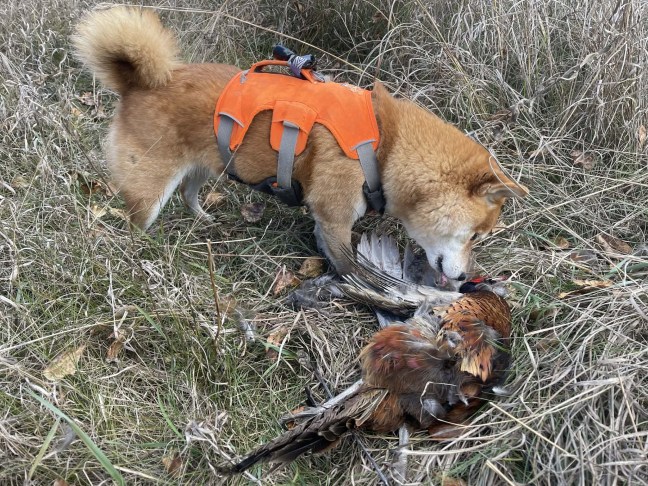
When hunting with a Shiba it may be difficult to keep track of them because of how small they are and their coat blends well with the brush. My dog doesn’t make any noise when hunting. I cannot rely on barks to alert me that he is onto something. I keep a blaze orange vest and bell on him for this reason. A Shiba is an independent hunter and if I don’t watch him, he may get too far ahead chasing after something. I once lost track of where my dog went for a good hour only to find him back at the car.
4) How did you train your Shiba to hunt?
I started with basic obedience training. Hunt training didn’t happen until much later since my original intent wasn’t to have a hunting dog. I am an outdoor enthusiast. We started hiking the trails early which allowed the dog to get used to the outside world. That led into off leash training. I started small and gradually increased the time and distance my dog was off leash. I was fortunate to have been able to spend more time with my dog during his formative puppy stage than most people get to. I feel that it helped with building the bond tremendously. Our first hunt was when my dog was around one and a half years old. I didn’t have any expectations and treated the first hunting season as training. I started my dog off on squirrels because that is what I was most familiar with. Gun fire introduction was with a 22 rimfire rifle. It is important that you start with something not too loud to prevent gun shyness.
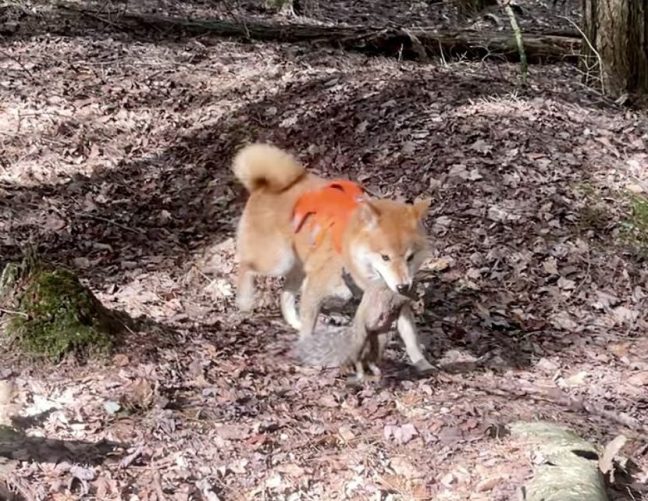
At that point my dog had only seen squirrels from a distance. Once I finally got one, I let my dog smell it, play with it, and carry it around. I then praised my dog to reassure him that is what I want him to do. My Shiba hunts squirrels mostly by sight and sound. With a dog I prefer to use the walk and stalk method rather than stay still in one spot. He will walk and stop every few yards to scan for movement if something catches his attention. I can pick out squirrels better at distance than my dog, but he has me beat at picking up movement. I try to keep my dog within eyesight. The goal is to have the dog chase squirrels up a tree for me to shoot.
Rabbits are hunted in a similar manner. The main difference is the dog’s scenting ability comes more into play to find and flush them out into the open. My dog was introduced to rabbits before anything else simply because they are out everywhere in the evenings. I used to live next to a wooded area and would let my dog sniff around and chase rabbits.
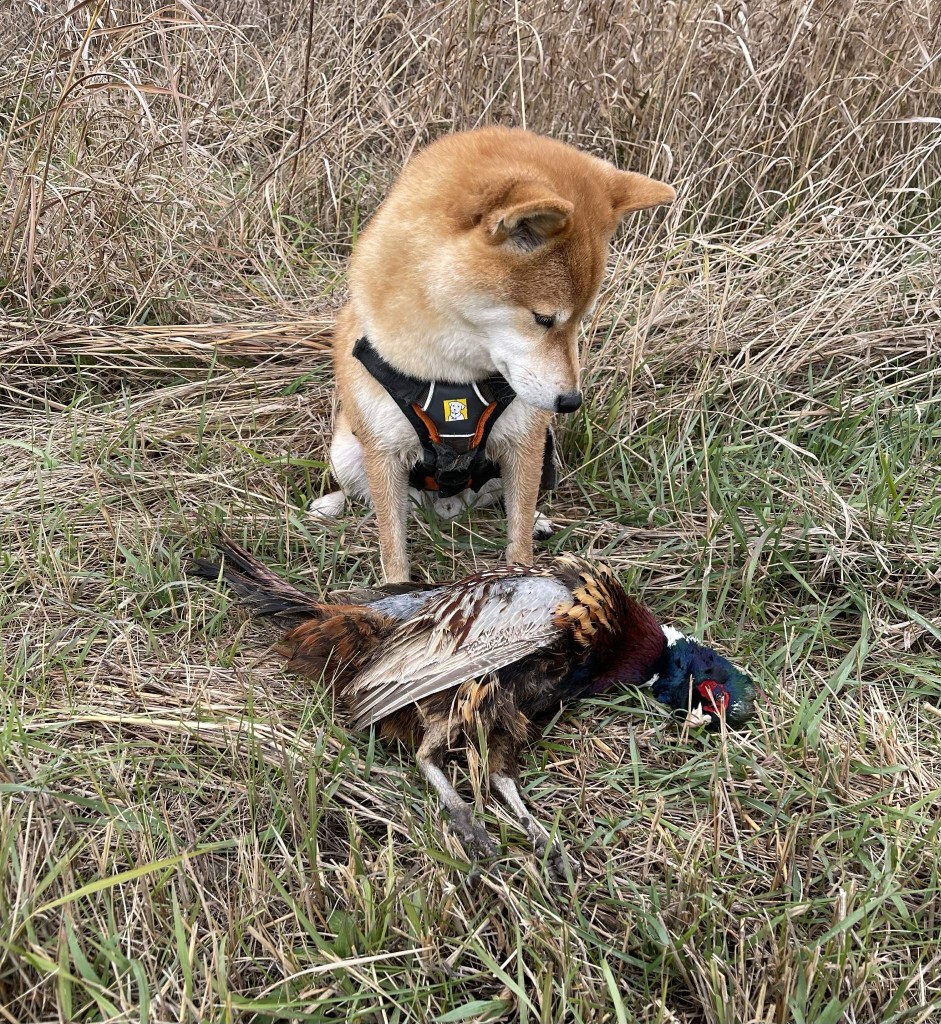
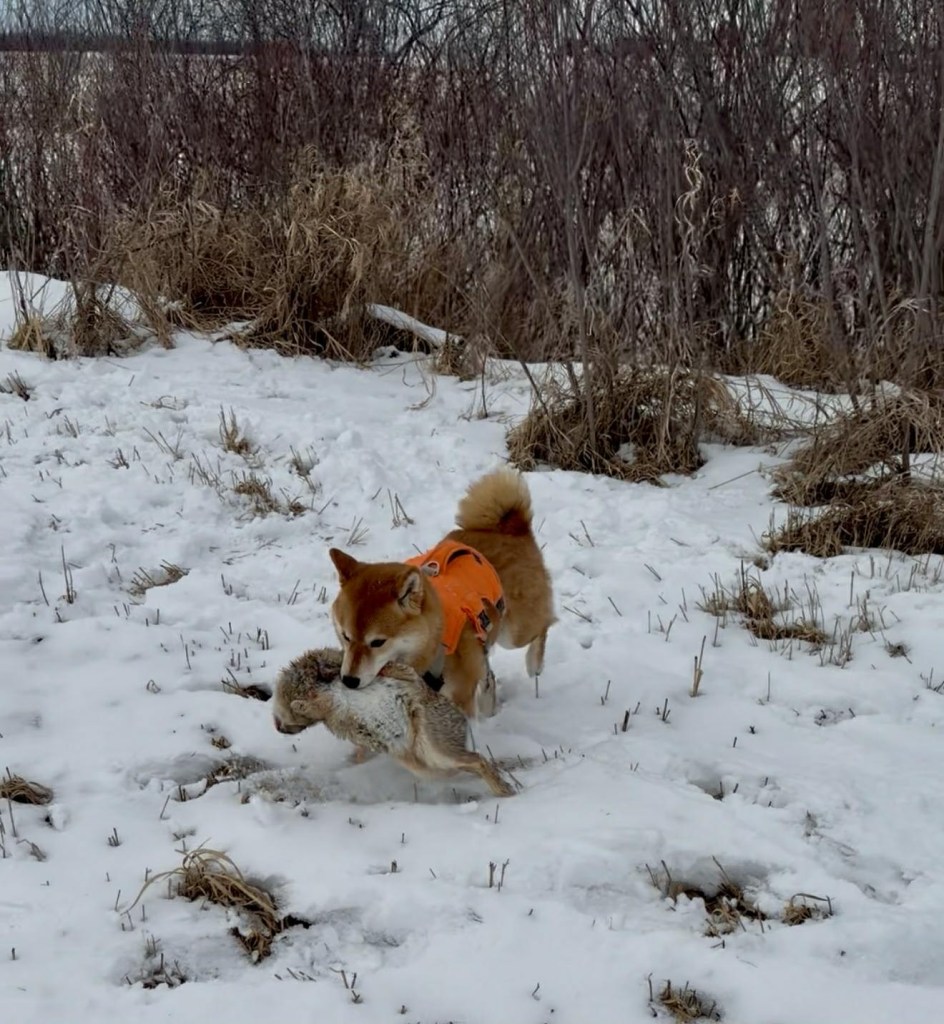
I transitioned to birds when my dog was six years old. I tried to pheasant hunt with my dog a few years prior to that but we did not have much luck. My dog had never seen a pheasant before and although he was likely picking up the scent he didn’t understand what we were after. It took me flushing a pheasant, shooting it, and then presenting it to my dog that he understood the assignment. Pheasants are also mostly hunted by scent. Some will run and hold tight and you almost have to step on them to get them to flush. The ones that have been pressured by hunters will flush far out at any sign of danger. I try to stay close to my dog so that the flush is within range of shooting. I mostly hunt with my 28-gauge shotgun so keeping the shot close becomes even more important. Our first season was very productive and we bagged 44 pheasants over a two-month period.
It is important to encourage interest in the game animals you want to hunt and discourage interest in the animals you don’t want the dog to hunt. My dog usually doesn’t bother deer but I can quickly call him off if he does start chasing them. Some other small animals he may also chase out of curiosity but won’t attack. Be firm and consistent in your training.
5) What game do you feel that your Shiba hunts with the most success?
Strictly based on numbers, we have had most success with squirrels. But that is because we have been doing that the longest. Based on how efficiently a limit is bagged I would have to say pheasants. The effort to reward ratio is higher. My dog also seems to be more excited about birds over rabbits and squirrels. There is a noticeable difference in the intensity in which he picks up and follows the scent of a pheasant over a rabbit.
6) Is there anything you would do over or wished you knew when you first started hunting with your Shiba?
If I could do it over, I would have started the hunting training much sooner by incorporating it into basic training routines. I would have made sure the proper live bird introduction was done prior to the first hunt. I wished I would have done more retrieval training early on. I know Japanese dogs aren’t known for their retrieving skills, but had I ingrained it sooner it would likely be better than what it is now. My dog will retrieve a short distance but the longer retrieves he may drop the animal before making it back. I focus mostly on bird hunting now and wish I transitioned my dog sooner. My dog is almost 8 years old now and I know I have limited hunting seasons left with him.
7) What are some things you looked for or encouraged in your Shiba to decide he would be a successful hunter?
My Shiba was very energetic as a pup and still is. Being a small dog, he has to work harder to complete the same tasks as a bigger dog. High energy shouldn’t be confused with drive and grit but it helps. As a 9 to 10 week old pup he was already wanting to chase the rabbits in my yard. I have always encouraged curiosity rather than stopping it. I remember my dog would always find stuff buried in the snow so I knew he had a decent nose. Apparently, he has good recall for a Shiba so I may have lucked out there.
8) Do you have any tips or suggestions for people who want to hunt with their Shiba?
If you don’t already have a Shiba and would like to get one that can potentially be a good hunter, I suggest doing your homework and picking a reputable breeder that has dogs with the qualities you desire. If you don’t care about your level of success and just want to have a fun experience with the dog you already have, that is fine also. I would suggest starting training as soon as possible. Off leash recall is a prerequisite for a successful hunting dog. That is probably the biggest hurdle you have to get over. Many Shiba people will tell you to never risk it, but I say just be smart about it. There is a time and place for off leash training. Live animal introduction is recommended prior to the first hunt. That is especially important if you want to use your Shiba for bird hunting. My dog does not care for training dummies and scents, so the training has to be done on the real thing. Take your hunter safety class and make sure you are proficient with the firearm you will be using. The animals you hunt deserve at least that much. Don’t take it too seriously. The important thing is spending time with your dog and not how successful the hunt is. Your dog is more important than any bird or game animal. Be safe and have fun.
*I’m no expert, but this is based more so off of my observations.
** Again, not an expert as I don’t hunt. More so based off of observation & understanding.






 Boomlay Shiba Inu