The Versatile Shiba

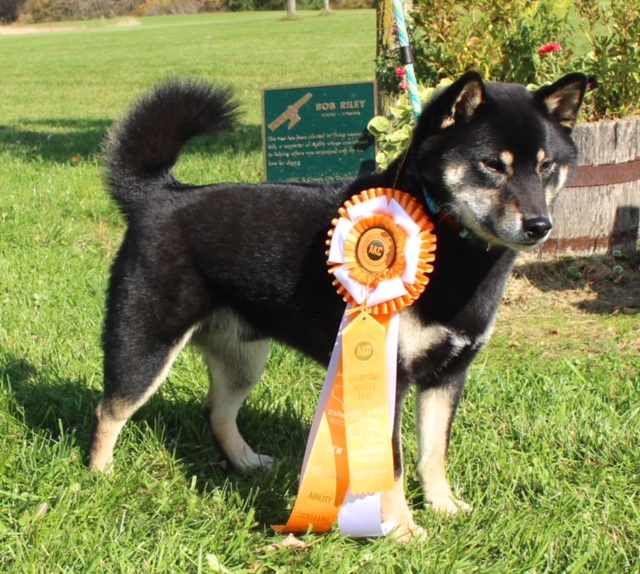
I decided to do something a bit different for my blog post. I decided to interview Mary Engstrom. Mary has accomplished amazing things with her Shibas and I figured she would have some wisdom to share with us. The NSCA honored Mary at last year’s banquet for Mayday’s and Mary’s accomplishments. Mayday was awarded the Lifetime Achievement Award for earning his CAX and the Versatile Shiba award for titling in Agility, Rally, Coursing, Fast CAT and Trick Dog.

I’m a firm believer in doing more with your dog. Dogs were not made to sit around idly. They need a job – an activity like nosework or barn hunt, a sport like agility or conformation, training exercises like obedience or rally will give a dog a sense of purpose and fulfillment. That’s why I decided Mary would be the perfect person since she is a wealth of knowledge when it comes to working with our independent breed.

  • What made you get into dog sports with your Shibas?

I completely fell into it by accident.  I had read a lot about the breed before I got my first Shiba Koshou, so I knew I was going to be working with an independent dog.  Everyone I spoke to said “if you are serious about getting a Shiba, you had better enroll that dog in every obedience class you can find!”  I enrolled in a series of 3 obedience classes taught at my local park district.  The first session was just obedience.  The second and third sessions were half obedience and half introduction to agility obstacles.  I didn’t know anything about agility really, but I thought if I had to include that to get the obedience, then so be it.  At the end of the series of 3 courses, the instructor pulled me aside and said “I have done this for 20 years and I can’t even believe I am saying this about a Shiba, but Koshou is a really good obedience dog and I see signs of him becoming an exceptional agility dog.  You HAVE to go on training him, especially with agility.”  She recommended some trainers in the area.  I figured it couldn’t hurt me to get off the couch and he might enjoy it.  The next thing I know, he was the top novice Shiba in the country his first year competing, he earned his PAX (Preferred Agility Excellence) title, earned high in trial at the NSCA national companion events in Jumpers with Weaves, high in trial for rally at the NSCA companion events twice, and went on to become the world record holder for the Shiba breed in the Clean Run 60 Weave Pole Challenge.   To this day I am grateful to the trainer who saw the potential in him and encouraged me to move forward with him at a time when the conventional wisdom was “you can’t do that with a Shiba.”

  • Have you trained other breeds? What was the most difficult part of the transition of breeds?

I had a couple of other breeds before Shibas, but didn’t train anything beyond basic skills with them.  However, as my journey with Koshou progressed, the school where we took agility lessons asked me to become an agility instructor after seeing us train for a few years.  (The owner actually said “if you can accomplish so much with a Shiba, you can certainly help these handlers with more traditional agility dogs.”)  That was a great experience in that it allowed me to realize that EVERY dog has issues that the handler has to work through.  Shibas are just more consistent in that many of our issues revolve around the independence of the breed.  If you look at what a dog breed was born to do (Shibas are independent hunters), you will find the clue as to how to best work with their temperament rather than trying to use a one size fits all training method.

  • I know I personally have struggled with competing with Nekora in the Agility Course Test – what are some tips you have to motivate a difficult to motivate dog?

I didn’t know anything about agility when I started the sport beyond what I had seen on TV.  It looked fun – the dog and the handler whipping through the courses.  I figured if I just taught the dog how to correctly perform the obstacles, we were ready to enter a trial.  It took me some time to learn that 90% of the success on the agility course was actually due to what happened BETWEEN the obstacles.  The dog has to be acclimated to the trial environment by utilizing fun runs, UKI or NADAC trials (which allow some training in the ring) or just visiting an actual trial and using the warm up jump.  You need handling skills such that the dog knows when to run full out versus when a turn is coming.  All courses have requirements for side changes (when the dog is running on one side of you, but with a direction change, it is most beneficial for the dog to start running on your other side.)  There are several types of side crosses and you and the dog must be fluent in how to execute them. The dog needs a start line routine and a recall after the run.  I tell potential handlers that the dog should be performing at a higher level than the level you are entering because trial environment stresses will give you a lesser performance at a show than you get in a controlled environment like a class.  Compared to teaching all of these, just getting them into a tunnel seems easy now, doesn’t it?

  • What do you feel makes a good versatile/sport Shiba? Genetics? Training? Patience? Dog sense?

Obviously, the dog has to be structured in a way that suits the sports of choice.  For example, a Shiba with a somewhat loose patella might not be the best fit for agility.  For coursing, you want a dog with a solid prey drive.  For obedience, dogs that have strong handler focus work well.  Personally, I prefer a more spirited Shiba to a less independent one because, while the more timid dog might be more obedient, the more spirited dog will be better equipped to handle all the chaos and distractions in a show environment.   To some extent, it will depend on what the handler is willing to spend time training.  I have more willingness and patience for training to channel the energy of a driven dog than I have energy for motivating an uncertain dog.

  • What was one of the hardest things you’ve taught/accomplished with your dogs?

I spoke of Koshou’s agility career earlier, and how as a handler, I had no clue what I was getting myself into.  Shibas like to be right, and are quite offended if they believe they have earned their reward, yet none is forthcoming.  In my case, unbeknownst to me, the errors were because I didn’t know how to use my body language to signal side changes, turns and obstacle discriminations, but of course at the time I thought “this dog is blowing me off.”  Some dogs stress up (get the zoomies) and some dogs stress down (refusals, no eye contact, etc).  Koshou stressed down, so I found myself with this dog that I could see was easily capable of doing all the obstacles, but was refusing to run, hiding in tunnels, or stopping in the middle of a course and yawning!  I kept taking class after class after class and, because the classes were just about obstacle performance, we kept failing in trials (a year and a half of shows with 0 qualifying runs.)  We had our “aha moment” during a seminar when the instructor said “you have to break this down into WAY smaller steps for him.  He doesn’t know that it’s just fun to run with you.”  And from that sentence, an agility career was born.  I took ALL of the obstacles out of agility and pulled him out of classes.  We went to our “yard” (a public grassy area in our condo complex) and worked on just making a highly rewarded game of running with me.  I called it “the cheese game” (his favorite food).  I put him in a stay and walked maybe 50 feet away, released his stay and took off running, zig zagging around the park.  The lead out distance was important because it allowed us both to be running at full speed for some distance before he reached me.  If he could catch me, he could have the cheese.  After several weeks of this, all I had to say was “cheese game” and he would practically turn himself inside out for a chance to play.  For the next couple of weeks, we continued the cheese game, but this time with an agility jump set up in the park.  The twist was, I made sure to never send him over it.  I just wanted him to learn that it was fun to run with me, and oh, by the way, there might be some agility obstacles out there too.  I could see him eyeing that jump, and remembering those were rewarded.  When I could see he was practically pointing to it, I sent him over the jump.  You would think I had shot him out of a cannon.  We GRADUALLY built up to having more and more obstacles there (that I might or might not ask him to do that day.)  He learned that the real game was running with me and the obstacles were just bonus fun. Until the day of our last run together, we always referred to running a course as the cheese game to keep that excitement for him.

  • What do you think is probably the most difficult sport for a Shibas to compete in?

My hat goes off to the folks to do obedience.  The guidelines for performance scoring can be pretty rigid.  These people have made a serious time commitment to getting those sits perfectly straight, and having their dogs hold a down stay for a long time with the incredible distraction of other “strange” dogs lying down nearby.

  • What are some tips you would give someone who wants to compete in multiple sports with their Shibas?

Watch your dog and honestly assess its strengths, weaknesses, likes and dislikes.  Pick sports that both you and the dog will enjoy.  No matter what you pick, there will be show costs, training costs and a commitment to training time.  I like to compete in multiple sports because it gives me options.  I had a recent knee injury so I used the time away from more active sports to train tricks.  Also, behaviors learned for one sport will carry over to other sports.  We use tricks during our agility warm up to get the dog focused.  I recently used the same “wait” command we use on the agility start line to hold my dog in place off leash for more than 5 minutes in an open field when the coursing line broke.  I highly recommend at least working for a novice rally title no matter what other sports you choose because it gives the dog exposure to working with you in the ring, and can be done on leash.  No matter what sport you choose, be sure your dog is physically fit.  And in the event your dog has been performing well and suddenly starts refusing to do something, be sure to eliminate any physical reason such as injury or hypothyroidism.

  • What do you feel is the most important aspect of competing with a Shiba?

Hands down, the handler’s emotional state.  Our emotions travel right down the leash to the dog.  You have to remember that these are beings who can clearly read the slightest lowering of the head or a barely perceptible (to us) curling of the lip or dip of the tail.  We might as well be screaming “I AM REALLY NERVOUS” before we go in the ring because they read our expressions that well.  I had to learn to come to a place where I truly felt that whether we Q or not, this run is a chance to just have fun with my dog and get an assessment of what we need to work on.  As I look back, I wouldn’t give up any of our runs – even those where we messed up – because the dogs were giving me really good information about what they needed.  I just needed to put my ego aside to see it.

  • Do you have any words of wisdom for owners who want to participate in sports with their Shiba?

Go for it!  You don’t know until you try.  Just don’t let anyone tell you “you can’t do that with a Shiba.”  Your mind set must be “how do I get this independent thinker to WANT to do this” rather than “my dog knows the command and doesn’t do it anyway.”  Work with the independence rather than trying to stifle it.  I really like clicker training for shaping behaviors and getting the dogs to think “what can I offer her to get her to click the thing so I get the treat.”  The sooner they learn that they are actually in charge of when they get the reward (by guessing the right behavior), the faster they start to partner with you.

  • What do you look for when selecting a sporting Shiba?

My current Shibas are Mayday (who came to live with me at 8 weeks of age and is now 4 years) and Thunder (who became part of our pack at 8 months of age and is now 20 months.)  Four years ago when I decided I wanted a puppy, I worked with Mayday’s breeder to temperament test.   We dropped things behind him to see how he reacted to the noise.  He very appropriately startled, then went back to investigate the noise.   I wanted a shiba with a somewhat higher ratio of leg to torso.  That is, when you look at the dog in profile, I wanted his legs to be longer than his torso was high.  Leggy dogs seem to have an easier time jumping and a longer stride for running.  I also wanted a pup who would seek me out to engage.  Finally, he showed his prey drive and work ethic by happily retrieving a ball again and again even at that young age.  All of these have served Mayday well in his careers in agility, rally, coursing and trick dog.

Thunder came to me quite unexpectedly.  I had expressed an interest in another litter that was planned a year out.  I thought that particular breeding should produce a great working dog.  Thunder had other plans.  His breeders (the same folks who had the litter planned for the following year) had decided just the night before I met him to place him in a pet home.  He and Mayday adored each other; he was of an age where I could begin sports training immediately, required no housebreaking, and had all the physical and emotional characteristics I look for.   SCORE!  I am mentioning him separately because he had one additional characteristic that is critical in adding a second working dog – that is the relationship between the two dogs.  I don’t care how great of a working dog the next dog might be – I can’t do it if my home will not be happy.  The bond between these two dogs is remarkable and means that I don’t have to spend time training them to get along.

  • Did you find a difference in attitude between males & females? Do you have a preference in gender when picking a working dog?

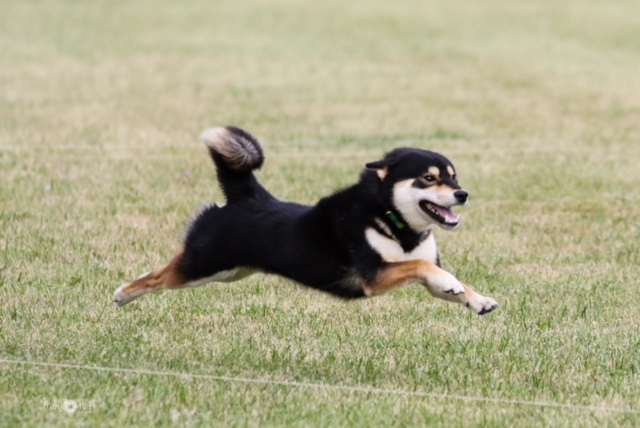
I think that is truly just personal preference. For agility I prefer the boys. They are just sillier and more tolerant of my mistakes. For coursing, I have never seen a Shiba with greater prey drive than my Chin Chin. She was ready to hunt no matter if it was birds, squirrels, rabbits or the plastic bag lure.

  • It sounds like participating in even one of these sports – let alone multiple Shiba sports – is a definite commitment of time and resources. What drives you to do it?

The day that each of my dogs joined my pack, I promised their breeders that I would see to it that they lived full lives with lots of opportunities for enrichment, and I promised each of the dogs I would give them a life that any other dog could only dream of.  Each sport we do offers a combination of different benefits to the dog – physical challenges, mental stimulation, unleashing of prey drive, one on one time with the handler, problem solving, working structure, the joy of earning a reward, a deeper bond between dog and handler, and the joy of just watching a dog be a dog.  These sports experiences help them become more confident dogs in everyday life.  With the variety of sports that we participate in (rally, agility coursing, Fast Cat and trick dog) we always have something fun and exciting to do, and the work never gets stale.  And while we talked a lot about all of our activities, I do make sure we schedule time with nothing to do as well.  And this isn’t just about the dogs– the activity has been good for my own fitness as well.


Mary’s Shibas and their accomplishments:

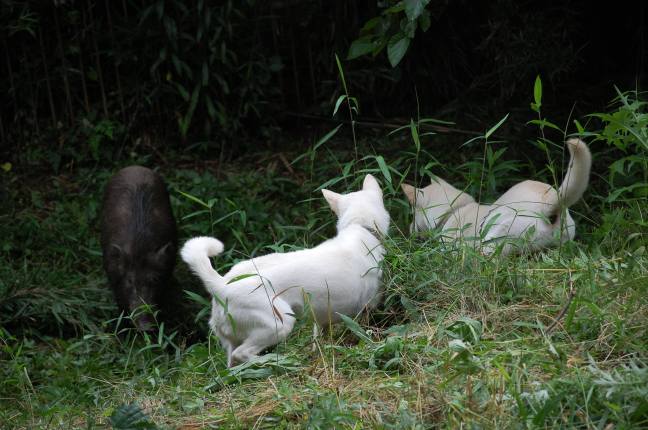
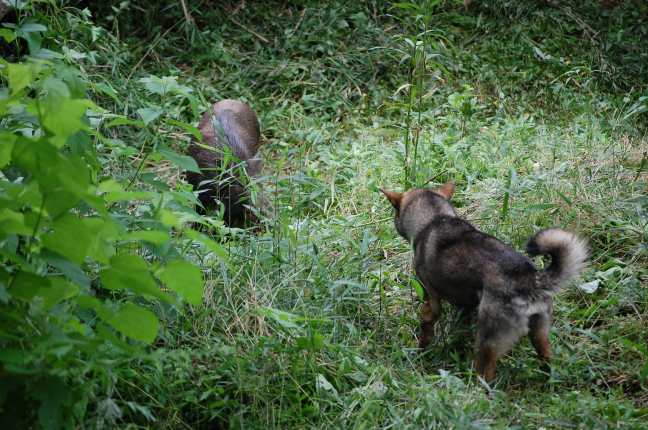
Mary's Shiba - Ko 1

Mary's Shiba - Ko 2
Koshou Friend of Kurgan “Koshou” – RE OA OAJ MXP4 MJP3 MJPB PAX XFP and Clean Run Ultimate Weaving Shiba (60 poles)


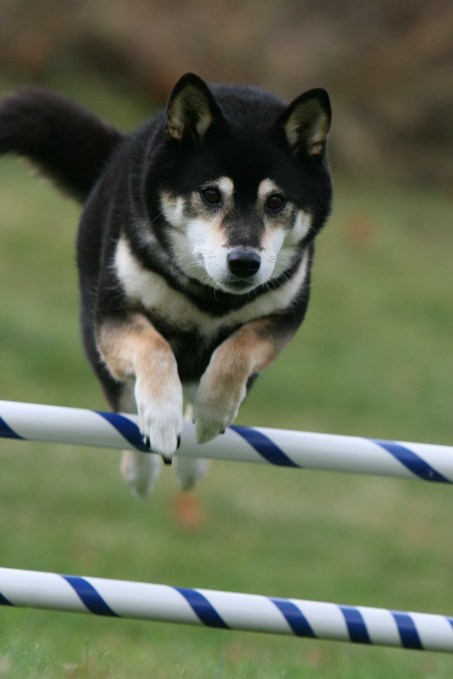
Mary's Shiba - Chin Chin
Hi-Jinx Designed in Black “Chin Chin” – RA NAP OJP NFP


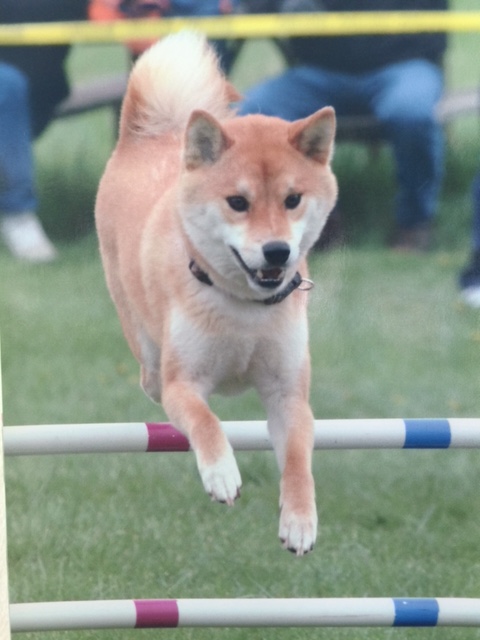
Mary's Shiba - Mayday
Hi-Jix Jumpin Black Flash “Mayday” – RN NA NAJ DCAT TKA CAX


489AF95B-D297-4DB1-9D35-021F70DF996D
Shoei Hi-Jinx Thunderstruck “Thunder” – CAA BCAT TKN. Photo courtesy of Mary Huff


Because I feel like we need more Shibas in sports here is a page I dedicated to it: https://boomlayshibas.com/shibas-and-sports/


My Experience At The NIPPO Grand National

254
Me showing Sawa No Benika in the Wakainu2 class at the NIPPO Grand National in 2016 in Chiba

Before I jump into this article I would like to thank Yumi Hagiwara and Shigeru Kato for their help by sharing their wealth of knowledge for this article.

This article, though it may be long, is informative about the technical side of NIPPO as well as my personal experience. In Japan.  I went to Hiroshima in 2015 and Chiba in 2016 for the NIPPO Grand National.  The Grand National is held on either the second or third weekend of November.  One day is reserved for the judging of Shibas and the other day the remaining breeds are judged. The second day after the breed judging, all the Saikosho (BOB) winners (Shiba, Kishu, Shikoku) from the Seiken (adult) class compete for the Souridaijinsho (Prime Minister award).

Nihonken Hozonkai , also known as NIPPO,  is an organization dedicated to the preservation of the native Japanese dogs – the Akita, Shiba, Shikoku, Kishu, Kai, and Hokkaido.  NIPPO organizes shows – the largest one being the Grand National. Hundreds of breeder/owners and their dogs flock there for their chance to be recognized for their quality. The dogs competing in the Grand National must have received at least one yuuryou (excellent) rating from a regional NIPPO show. Only the winners from the Seiken class are eligible to compete for Saikosho. In order for the Saikosho winner to be eligible to compete for the Souridaijinsho there must be enough dogs/placements handed out.  Usually the only breeds with enough entries for this honor are the Shiba, Kishu, and Shikoku.

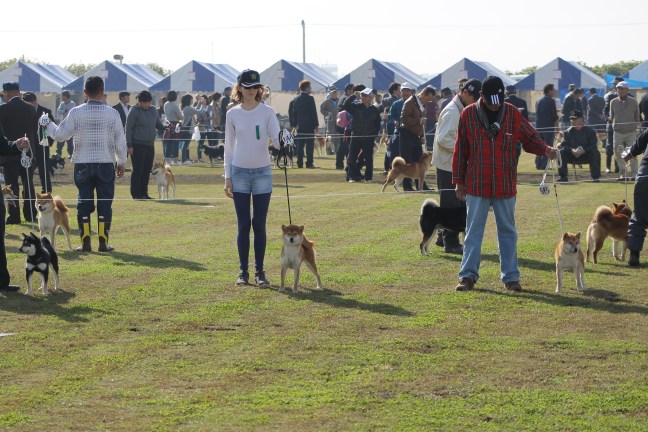
NIPPO shows are held outside – the Grand National is no different. In Hiroshima it was held in a giant muddy field. The rain waits for no one and the show must go on literally.  It reminded me of Florida, except it was cold… Very cold… I got very muddy my first show – my shoes were caked in mud, my feet were soaked, and I kept wishing I had a pair of rain boots.  I wasn’t able to go shopping and I have quite big feet so I don’t think I would have had much luck in the woman’s department.  I’m sure I received a lot of disapproving stares on the train ride home. But it was worth it to see all the amazing dogs.  It was my first time seeing Shikoku, Kishu, and a Sesame Shiba in person – and they were gorgeous beyond belief!  The show in Chiba was very pleasant – we got rain the first day (yes there was more mud – I started having flashbacks) and it was cold. The second day was a vast improvement, the sun was shining and it was warm.  I was able to peel off layers of clothes.  This Florida girl does not tolerate the cold at all; therefore, I made sure I bundled up. But once again the show was held in a huge field. Several large rings dotted the landscape, large white tents created a border around the rings giving it a nice, safe feel. There’s a large red and white striped tent, where the announcers sat, hat sellers were stationed, and where the prizes where kept.  It was also where the judges ate lunch, much different from an AKC show.

The way dogs are handled at NIPPO shows is totally different from how dogs are handled in AKC.  There is no baiting or touching the dog. The dog must stand in front of the handler to show off its kan-i (the dog’s spirited boldness) with the leash at a 45 degree angle.  If the angle is any sharper it causes wrinkles, ruining the dog’s expression. For NIPPO judges a good expression is one of the most important things, followed by coat quality, body structure, and good character with a simple, general appearance. Judging starts at the dog’s front, side, and then rear end.

What judges look for when judging the dog from the front is the dog’s expression, ear pitch, and for a strong front assembly. When the judge moves to the side of the dog they get a better idea of the structure, and see the coat quality and color.  When judging from behind the judge is making sure the dog has the correct urajiro on the tail, and down the hock if red.  If the dog is black and tan they are looking to make sure the dog has black on its hocks in addition to the correct urajiro on the tail.

I knew I was given the amazing honor to handle my friend Yoshito Watanbe’s Shiba bitch Beni – but let’s just say I wasn’t quite sure how to execute the handling skill with a dog that didn’t know me or understand what I was saying.  I tend to talk a lot to dogs when I handle them – it makes me feel less nervous, and I was extremely nervous.  Watanbe-san yelled at me “Ms. Alexis – this isn’t an AKC show!” He made the motion of me baiting a dog in front of me and signaled me to stand behind her. Beni looked at me as if she knew I didn’t know what I was doing.  I will say I got her to stand decently – the judge evaluated her, Yoshito held her for the wicketing and teeth counting, but I did the rest.  I could not understand what they wanted me to do so they made hand motions; unfortunately I don’t speak Japanese, much to my dismay. I had to gait her in a triangle, the judge looked at her again, made notes on his clipboard and we were dismissed until afternoon judging.

The afternoon judging was less work than the morning judging but still pretty nerve wrecking. The class was way bigger than I imagined, honestly I can’t remember how many dogs there were but I have a feeling it was close to 20.  I was directed where to stand, my heart was beating a million miles a minute, I’m sure they could see it beating through my shirt. We all stood behind our dogs, our bodies forming a semi circle of sorts – Beni was a bit more cooperative, she still knew I didn’t know how to correctly make her stand (sorry Yoshito!). After walking around and staring down the dogs, the judge started to make pulls. He stared with the dogs to my right, I was staring straight ahead at my friend Jun and Yoshito – I could only imagine what the look of my face!  I watched the judge motion to handlers to move several steps out of the circle; I kind of forgot about Beni for a moment until the judge looked at me and motioned me to come forward.  I worked hard trying to get her to stand perfectly (remember this was my first time showing a dog NIPPO style). He intensely stared at the dogs once more and then motioned us back to our spot.  The judge and his assistant then split the group, unknowingly; I went to the left side thinking that’s where they wanted to split us.  They motioned me to come back; I could have died from embarrassment   I counted the other dogs realizing I was in 8th in place. The other handlers started ducking under the white ribbon that served as a ring barrier. The judge and assistant came around handing out beautiful metals. I was shaking with excitement when I received mine.  I bowed to them and said thank you in English, any and all Japanese I knew escaped by brain in that moment.  They handed me a slip which I presented both the medal and slip to my dear friend.  He told Jun and me to wait for a moment and we played with Beni as we waited for Yoshito to return.  Beni really liked Jun over me, it bruised my ego a bit but she was still sweet to me.  Yoshito came returned with what looked like a giant poster. It was like a score card for Beni’s placement in her class. We took a photo together,  Beni wasn’t really interested in stacking anymore while I tried to get her to stand beautifully.  Yoshito then so kindly presented me with the metal and the shoujou.  It’s a paper that has the dog and owner’s name, it also states the dog received a yuuryo.  I have the picture framed, with the medal, and the green handler ribbon that I wore at the show on my wall.  Above it is the shoujou, that I had to make sure would survive my long trip home from Japan.  I also regularly wear my NIPPO hat Yoshito gave me as a gift.  I’ll forever treasure those amazing gifts and memories of that show. My heart hurts knowing I won’t be back in Japan for at least another 4 years but I’m eagerly waiting for the day I’ll be reunited with my friends, the Grand National, the beautiful Nihon ken, and a country that holds a very special place in my heart.

Meet The Breeds

I just got back from the Orlando shows (I guess you can call it the Royal Canin cluster ). Even though it’s the Tuesday after,  I’m still exhausted, which is why I’m late in posting this.

The regional club I’m part of,  Heart Of Dixie Shiba Fanciers, was in charge of the meet the breed booth. Honestly even though I love showing dogs, getting together with dog friends and shopping around for dog related items. My favorite thing about the Orlando cluster is the booth. It is where we, as dog people, get to educate the public about our breed, share our dog’s accomplishments, breed temperament and quirks, answer questions and give real life experience to potential owners. Which is so much better than Google if you ask me.

I feel this is the most important part of our job – public relations/education! Our sport and our hobby is dying. When we give the public a face to go with the breed, it changes the public’s perception of  breeders.  Instead we become crazy dog lovers who will do anything to protect and responsibly promote our breed. We have funny or even down right embarrassing stories we share to highlight how our breed behaves. We show the public we aren’t bad guys – we’re good people who are really obsessed with our dogs and go above and beyond in caring for them.

This is what we need more of, this is what’s going to save the Purebred dog!

1534C3C5-FDB7-483B-84B8-B63707A89E2E
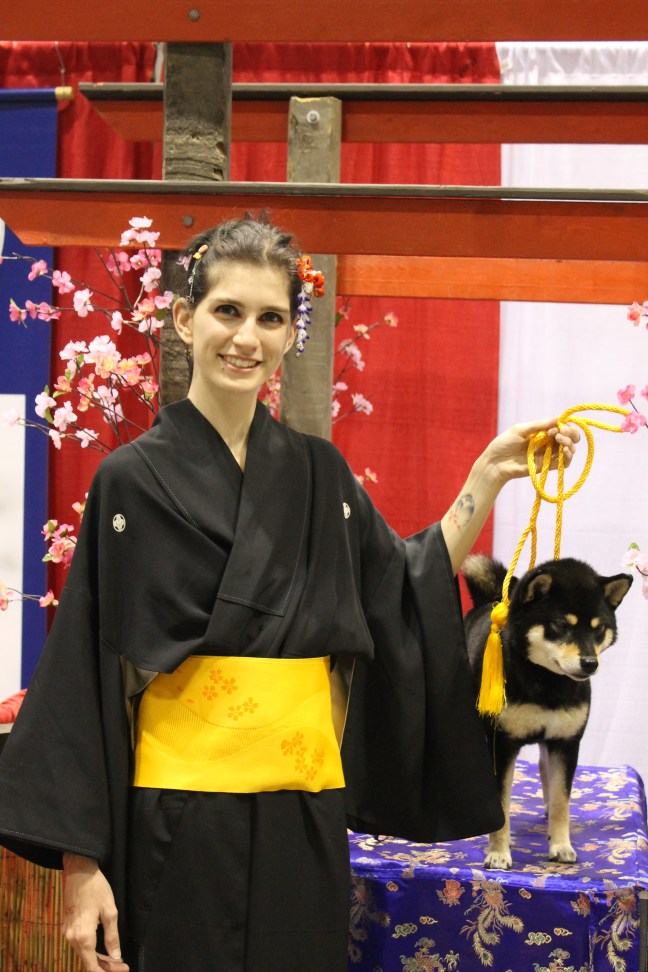
Me & Nekora posing with the Heart Of Dixie Group 4 booth ribbon. It was an honor our booth was able to get a placing. A HUGE THANK YOU goes the Cheryl Lee Giffin for designing & building the booth’s Torii gate. Also a huge thank you goes to Olivier Morin of 1TDC.com/K9Love for this photo!

012

Why Aren’t Young People Getting Into Dogs: Part Two

I promise part two will be a bit more exciting and maybe one can consider, a tiny bit biased. The second installment of Why aren’t young people getting into dogs? Is that sometimes breeders do a great job at discouraging young people who want to buy a dog.
You’re probably thinking, what? That’s totally crazy, I didn’t have any issue getting my dog. Well I’m glad it wasn’t an act of congress for you to get your dog – really I am. I’m also very jealous as well.
I decided at 17 I wanted to show dogs. I wanted either an Akita or a Shiba Inu, I decided on the Shiba due to size and a more even temperament. I called up a breeder and we were to meet at a local handling class. I showed up, we chatted and that was it. I made contact several times over the course of maybe 4 months but she wasn’t interested in selling me a puppy or teaching me to handle dogs. Luckily an amazing Samoyed breeder took me under her wing, taught me to handle dogs, allowed me to show her dogs, and sold me my first show dog. We are still great friends.
After finishing Chi I started looking around out of state for a Shiba breeder as well as making contact again with the local breeder. The local breeder was concerned that I would move away to college and leave my dog behind. Even after I assured that a) I wasn’t moving out anytime soon b) I had no plans to go to college and c) I wouldn’t leave any of my animals behind. She told me she would put me on her waiting list and would let me know when a litter was in the works. I was so happy that finally I was able to be put on a waiting list for a Shiba! I’ll say here, sadly, I never heard back from her.
Slightly discouraged, I returned my attention to an out of state breeder. I went on the NSCA website and started looking at different websites, deciding which dogs I liked best. I emailed many breeders with dog people references to prove to them I was very serious about getting a Shiba – very few even bothered to return my messages. Most weren’t willing to part with a pick bitch. Yes, I get it – it’s a lot to ask but I’ll be darned if I spend a lot of money on a mediocre finishable dog. I want to start a bloodline. I was not trying to play catch up or spend more money for another better dog later on. The out of state people that emailed me back replied that I would be put on a waiting list. I never heard from any of them.
Finally I got a promising return email, kept in contact, pestered the crap out of her with my million questions, and waited 2 years for my chance to own a Shiba. They say good things come to those who wait – I couldn’t be happier with Nekora! We finished with 4 majors, a group 4 placing in regular groups at 11 months old, and we are currently starting our agility career. She’s smart, willing to learn, adventurous, and gets along with all my critters! Plus she’s my favorite color to boot.
But back to the subject, who would go through all of this to get a dog? Wouldn’t it be easier to go get one from a newspaper, pet store, or shelter? 2 of the 3 choices would be cheaper initially, and I think all 3 would be less frustrating and time consuming. To think this was to get a show dog – something that has the breeder’s name on it and would bring some kind of bragging rights. This wasn’t just a couch potato pet, this was a dog that was going to do something, make a name for herself! Isn’t that what a breeder wants, to promote their breeding and breed of choice, a chance to pass on the torch to a younger person who has the breed’s best interest in mind? No one lives forever my friends.
Young people need more encouragement and friendliness to save our sport and preserve the breeds we all love. We’re competing against buy here/pay here/here they are, no lines no waiting pet stores, cheap newspaper puppies, #adoptdontshop rescues and we are losing. We need to be welcoming to everyone interested in our breed and sport. We don’t have to sell them a puppy but we should take the chance and try to guide and educate them. You’ll never know what you will accomplish. The worst case scenario is that people leave you feeling like they met a friend who shared their love of dogs with them.

Why aren’t young people getting into dogs? Part One

The question is often asked, “Why aren’t young people involved in showing dogs?” While the answer is not just black and white there are some obvious responses.  First and foremost it’s damn expensive!  Young people are often just beginning their careers or have entry level jobs which is not allowing for discretionary spending that accompanies the relationship between a dog and owner.

I’ll use myself as an example of the grand money issue, because who would know better about this situation than someone living in it and I really don’t have anyone else to compare against without getting super nosey.  I work a full time job with health insurance partially covered by my employer, I’m off on weekends and the schedule isn’t too bad.  I won’t complain as I have a pretty good gig with no college education. But I take home less than $1,500 a month. Thank god I live with my parents otherwise it would be me, my dogs, rabbit, birds, cats, fish, and toads living in a cardboard box. Could you imagine how crowded it would be in there?

So now here comes the fun part – math! My most favorite subject ever, I’m kidding I hate math almost as much as it hates me. Let’s start our journey into the show dog world, first have to get a puppy – I mean this is a huge investment to your future. This darling ball of fluff will cost you from $1,500 a whole month of pay for me to – $5,000 for a fantastic NIPPO Shiba.   I’m not knocking breeder’s prices; I believe you get what you pay for and someone has put a lot of time, energy, and money into my pup. Now we have our puppy – let’s say we spent $2,500 on it. We need supplies for our puppy; I do a lot of online shopping because it’s usually cheaper, so I used those prices for calculating my costs.

Crate at Medium size- $30 on sale (normal price is $95)

  • Collar & Leash – $45.25 (White Pine collar & leather leash)
  • Water bucket – $6.49
  • Stainless steel bowl – $3.00
  • Crate Pad – $16

Our subtotal is about $2,600.

Show supplies for our new show puppy:

  • Show collar/leash combo – $12 (Alvalley slip lead)
  • Grooming table Medium – $122
  • Dog blow dryer – $175
  • Grooming box – $70 (minimum)
  • Brushes – $50 (minimum)
  • Shampoo 1 gallon – $45.95
  • Extra crate – $30 (minimum)

Our new total is over $3,100 which for me is more than two months of work! We haven’t even gotten to grooming products, entry fees, hotels, gas money, and handler fees (optional)

BUT WAIT! I’m forgetting something important – FOOD! And treats, bones, and toys.

Food and treats costs me $100 online and with my other supplies (supplements, treats, horns, hooves, and antlers) another $103.68 a month. I buy for 5 dogs so we’ll divide by 5, about $40 a month.

I haven’t even gotten to vet care, training classes, or even god forbid, a medical emergency!! Nor have I included people cost like rent, insurance, the cell phone bill, water and electric, and groceries! See how quickly that $1,500 a month has disappeared?! Maybe someone could stay afloat buy getting a second part time job, but that leaves one stressed out and I feel not enough time to spend with the puppy.

Honestly I think this is the number one reason young people don’t get into dogs – they simply can’t afford it!  I have other theories as well which I will share the next time.

Supporting The Purebred Dog

We’re all here because of our love of the purebred dog – more specifically the Shiba Inu.  I’m writing this not to point fingers at anyone (honestly I wouldn’t know who to point fingers at) but more as a plea, a suggestion, or call it constructive advice.  Purebred dog fanciers seem to be a dying breed. I don’t have an exact answer as of why, but I do have some observations.

A common misconception is the sudden need to save every dog out there and if you don’t save a dog you’re a cruel, hateful person.  Animals should never suffer – which is why I have personally taken in a gambit of second hand animals from canines to felines, rabbits and chickens to fish.  My love for animals is so strong that I became a vegetarian more than 10 years ago.  I CHOSE to buy a dog.  People may think of that as a contradiction; why would I, the vegetarian who saves even fish, buy a dog from a greedy breeder?  Simply stated, because I want a dog that is reliable in temperament, health tested and bred for the purpose of maintaining and improving the breed, along with the never ending support of a breed expert.

The general public is so out of touch with what good, reputable breeders do for their breed and dogs in general.  A couple of months ago I took my dogs out for Ice Cream at a dog friendly joint. These girls ran up and exclaimed at how well behaved my dogs were and asked what ‘kind’ dogs I had.  With great pride I explained that Chi was a purebred Samoyed and Nekora a purebred Shiba Inu.  One girl then asked “where did you rescue them from?” I gently explained how I didn’t rescue them but instead purchased them from reputable breeders. “Oh” she replied very disappointed in my choice. I kindly explained why I chose to purchase my dogs and that they’re show dogs, a sport that both me and my dogs enjoy together.  This was the first “negative” reaction I’ve received in the 7 and  1/2 years I’ve owned a purebred dog.

We as breeders and purebred dog enthusiasts haven’t done a great job in marketing ourselves. I speak from experience. I’ve had multiple people, including my own mother, who have told me I’ve been the friendliest dog person they’ve spoke to all day at the MEET THE BREEDS BOOTH! How embarrassing is that? How is it that a shy, quiet, socially awkward me is the friendliest person at a large scale venue? It hardly seems possible that I, when compared to people who have been breeding, showing, and supporting the purebred dog longer than my measly 8 years, could be considered the most friendly and engaging.  One lady even told me that purebred people were a bunch of unfriendly snobs. She was looking at different breeds she was interested in, wanting to add a new dog to her family but no one gave her the time of day! No wonder people turn to shelter dogs, not only are they cheaper but you don’t have to accept that behavior from a breeder. I know this is not always the case but if we are to perpetuate and encourage the continuation of purebred dogs, not only do we need to reach out, engage, and educate the public we must make ourselves and our dogs accessible and approachable.

That’s why I make it my personal goal to be as friendly and welcoming as possible to people who approach me and my dogs. I love to talk about my dog’s heritage, breed purpose, and why it’s so important to find a reputable breeder of any breed! When I take my dogs out in public I expect to be stopped and asked a million questions. I take my time to answer and let the general public interact with my dogs. I do it to show purebred dogs aren’t bad, reputable breeders aren’t bad, and picking a breed based on how well you can manage a dog is the way to go.

I even take my dogs to the school I work at where I give kids age 1 – 11 a presentation about dog bite prevention. But I don’t stop there! I talk about responsible pet ownership, purebred dogs, and about the breed.  Some of it does go over the younger kid’s heads but the older ones listen! I even send home a packet of information of how to avoid dog bites as well as information about my dogs’ breeds, the good, the bad and the ugly! I do this so little Johnny doesn’t get a Shiba Inu just like Ms. Alexis.

I take them to my local high school explaining how showing and raising dogs is a labor of love.  I explain how you need to research the breed and understand what that specific breed was bred for. I regretfully inform them that breeding dogs the correct way isn’t going to make them rich – you’ll hardly break even! I give tips on how to find a reputable breeder and things to look for when looking for breeders and how to be a responsible owner!

This is why I love the idea of the meet the breed booth. You get to talk all about your breed of choice. Remember, this is our chance to be ambassador’s not only to our breed, but to the art of showing dogs and purebred dog ownership. Whether you are manning the booth or even taking your dogs out in public, please be as pleasant as possible. I get it – I do, we get tired, we get hungry, we get sore, but that doesn’t stop me! Last year I manned the booth from 10am – 2:30pm all by myself and I made sure I answered all questions with a smile. Because I owe it to my dogs to put them, my sport, my breed, and I in the most favorable light possible.

We, as purebred dog lovers, need to support our dogs, our sport, and embrace the people who are interested in our breed. They may be the next breeder or owner handler. Don’t turn them away – embrace them, at least emotionally. Your behavior may just be what scares off a valuable player in our game that we’re so badly losing or you could be the reason they join our ranks.